A hill of beans

If one can set aside the many, many ethical issues involving AI art, the question remains for its detractors (like me): what exactly do its proponents see in it? It’s certainly gotten “better,” in the sense that the people in the images now usually have the right number of fingers, and any text isn’t a garbled mess of ersatz letters, and there are fewer instances of what H.P. Lovecraft would call non-Euclidean architecture. But for me at least, the more accurate AI gets, the less it appeals. In the early days of DALL-E and Midjourney, when we were all stuck at home in the midst of a pandemic, typing silly prompts and getting smudgy blurs in response was a lark. Like the joke about the dog who could only type 20 words a minute, the remarkable thing was that it worked at all, not that it was any good. But today, when I prompt Chat GPT with “patriotic American family with a boy and a girl and a dog watching TV,” the elaborate tableau generated is so on the nose, and yet so soulless and dead-eyed (see below), that it renders all the state-of-the-art computation (and the presumably extravagant energy use) irrelevant. All the figures face forward and arranged using strict isocephaly; the virtual canvas is arranged with horror vacui that makes Where’s Waldo look open and airy.

chat gpt
Chat GPT image from my prompt (this is the first, and I hope the last, time I will ever use generative AI)

There have been a lot of think pieces about the politics of AI art, from claims that it’s beloved by fascists, to the counter belief that it’s a great democratizer. It does seem to have a particular home on social media, Facebook especially, where AI’s prosaic manner lends itself to oversimplification, cliché, and moralism. When you don’t have to do the work of actually visualizing what you’re saying, you don’t have to make sure your ideas make sense and that your facts are, well, facts. Part of the process of creation is realizing that your visual problems may actually be conceptual problems. Similarly, viewers looking for confirmation of their own beliefs are more easily swayed by images that have the veneer of reality. Or they might just accept them as real.

Whatever the politics, it’s this effortless, cut-and-dried nature of AI that makes it so tedious. Allow me to make another one of my patented far-fetched analogies. In the mid 90’s, during the heyday of Microsoft Office, clip art was everywhere, and the most overused clip arts of all were the Screen Beans, a series of bulbous human-shaped silhouettes doing things, or more commonly, reacting to things. These illustrations were designed by Cathy Belleville and licensed to Microsoft for distribution with Office in 1995. They depicted poses that were purposefully vague, so that they could be used in any situation; however, that vagueness also drained them of any meaningful content or personality.

But, boy howdy, they got used. In Powerpoint presentations, yes, but also in church bake sale signs and guitar lesson flyers and passive aggressive notes reminding people to pay into the coffee fund. This was before most people had Internet access so it all got printed on the sly using the office laser printer. So many trees gave their lives for the millions of reams of 20 lb. copy paper that were emblazoned with a screen bean jumping in the air or scratching its head in bewilderment. But for all the ubiquity of these inky nebbishes, they never really gave the texts they accompanied any new information.
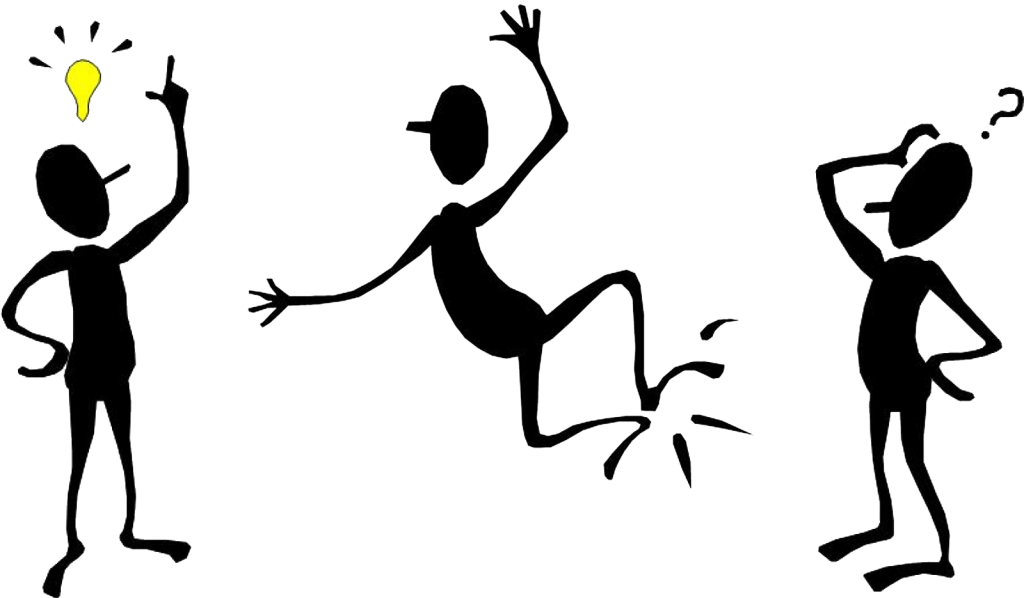
those unavoidable Screen Beans

So why do these generic, overused illustrations remind me of AI art, which is supposed to be bespoke to the user prompt? Both are art for people who really don’t care about art. They are perfunctory nods in the direction of art employed by people who lack the skills, funds, or interest to do better. Clip art, like AI, was presented as a democratic form bringing design to the masses. Why limit art production to people who spent their lives developing a skill, who expect to be paid for what they do? This will do instead. But to paraphrase Johnson, “what is drawn without effort is in general viewed without pleasure.”

The history of art has been the history of its production and distribution. When books had to be written by the few who were literate and copied painstakingly by hand, there were few books, but they were highly valued by writer and reader alike. Similarly, music production once required musicians who had invested years into their craft, as well as had access to instruments or could make their own. Listening required finding these musicians, organizing them, and gathering an audience. Painters had to apprentice with masters in their workshops; they had to know how to mix linseed oil or tempera with rare pigments. As people learned ways to mass produce their tools, to replicate their creations, and to widely disseminate the results, the arts changed. And this was a good thing, because it meant greater access for art lovers, a lower bar to entry for potential artists, and less cost for everyone. Technology in this case really was democratizing. But up until now, however it was made, the creation of art had to be intentional, and took time and practice.

This is what’s lost when effort is eliminated. Whether you mine your own cobalt to mix your own paint or you draw in digital media on a tablet, the effort is the art: not just the act of creating, but your motives, your lived experiences, and your personal aesthetics are the ultimate media of your work. Likewise, the effort an audience brings to close attention, to interpretation, to contextualization—that’s the other half of art. And if we give the production over to machines, we may as well design an AI to enjoy it.
Pathetic what now?

The title of this blog, “Pathetic Fallacy,” is not just a great name for a punk band. It’s a literary and art criticism term for the cliché of attributing human emotions to inanimate objects or natural phenomena, like saying “the angry waves” or having a thunderstorm burst out just as your gothic heroine escapes the mansion and runs into the moors. If it isn’t obvious, the term is mean pejoratively.

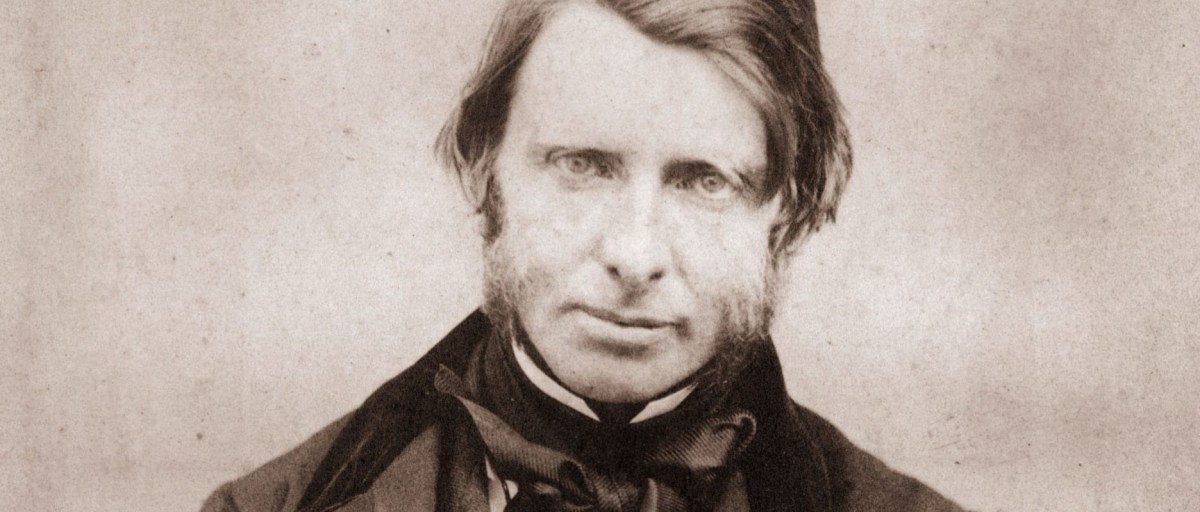
“Pathetic Fallacy” was coined by the Victorian critic and theorist John Ruskin (in the photo) in the third volume of his book series Modern Painters in 1856. Ruskin was taking to task the Romantic poets of the previous century, guys like Wordsworth, who might have written about clouds and daffodils but only as props to explore his own feelies. In the 19th century, “pathetic” meant “causing emotions” and “fallacy” didn’t mean “an error in reasoning,” but more broadly, “falsehood.” So the phrase could be restated as “emotional falseness.” Which is not a good name for a punk band and only a so-so name for a 2000’s indie one.

Ruskin was an interesting guy, an art historian who was a painter himself, a theorist whose work paved the way for environmentalism and for the arts and crafts movement, a champion of J. M. W. Turner and the Pre-Raphaelites. He was a social reformer and a philanthropist. At the height of his powers, Ruskin defined what art was and what it did, at least as far as the Victorians were concerned.

He was also a consumptive, depressed man who was abusive to his wife, attracted to adolescent girls, obsessed with Spiritualism (as in seances and that sort of thing), and whose ideas were largely swept aside by the Aesthetic movement in the 1870s and 80s. Today he is most famous for dissing the work of James Whistler, to the point of a retaliatory libel suit.

Critics are often, quite rightly, accused of gatekeeping. In 1939 the critic Clement Greenberg wrote the essay “Avant-Garde and Kitsch,” stating that some art is good because it’s challenging and some art is bad because it’s popular1. In the years that followed, Greenberg worked with the CIA-funded Congress for Cultural Freedom to display artists like Jackson Pollock in communist countries, presenting them as paragons of American Individualism2. “Kitsch” as a concept was ubiquitous in the art world for decades—until another critic, Susan Sontag, struck back with her essay “Notes on ‘Camp.’

Closer to our own time, Roger Ebert spent much of the last year of his life picking a fight with nerds online by insisting that video games would never be art. I dunno, if I were dealing with the terminal health problems Ebert had, I would not spend my numbered days annoying a bunch of surly Zelda fans. Also I find the project of defining “art” to be profoundly tiresome. Still, I will always love Ebert for the joy he brought to his work, the sheer enthusiasm he had when he was recommending a new movie that brought him delight. Like Garfield: the Movie.

I am fascinated and ambivalent about the critical process. At its best, criticism can provide context and perspective that makes the artistic experience richer and more social. It’s a game that we play that doesn’t tell us what a work means but gives us something interesting to think about while we choose what the work means to us. At its worst, criticism tells us to distrust our own tastes.

All of which is to say, I still think Pathetic Fallacy would be a great punk band.

  1. Don’t @ me, I know this is oversimplification, but I’m writing a silly blog. ↩︎
  2. I find it amusing that abstract expressionism was shilled by the Eisenhower Administration, given that these days the Right seems to be all-in on photorealistic AI. ↩︎

Hello (again) World!

I was feeling a bit down the other day, what with (gestures at everything), and I said to myself, what I really need to do is some old-fashioned blogging, the kind from 1999, when the Internet was a wild an wooly place and SEO meant typing your search terms a few hundred times into your website’s <header>.

I still had an old Blogger site, but I wanted to move to something more contemporary. So here am I at my new WordPress home! Maybe having to pay for hosting this will spur me to write more often; anything’s possible. I have imported the old blog’s content but some of it glitched out, and some of it embarrasses me, so I am pruning a lot of the old content, and will continue to. Sorry if you are a completionist? I guess your best bet is the Internet Archive.

Anyway, to reintroduce myself: I’m John McCoy. I am married (for 35 years!) to a beautiful philosophy professor who is smarter than me and dad to two kids who are a biochemist and a medical student and will therefore be richer than me. On the Internet I’m best known for being older brother to my more famous sibling, Dan, of the comedy Flop House podcast. But I am second best known for my own, only occasionally funny podcast, Sophomore Lit. The tagline for this podcast is “where we re-read your 10th grade reading list,” and in the beginning my goal was to focus on stuff you only read in high school, like Catcher in the Rye or To Kill a Mockingbird. Also I wanted it to be silly. But as time went by two things happened: first, I ran through the obvious list of books, and second, I found that my guest hosts and listeners were genuinely interested in having a podcast that discussed formative literature sincerely. So these days episodes might be about kids’ books, like The Twenty-0ne Balloons, or things you might have read in college, like the Bell Jar. Anyway I’ve been doing this podcast since my mid-forties and now…I’m not in my mid-forties.

Speaking of kids’ books, Phil Gonzales of the Deep in Bear Country podcast and I did a podcast called Klickitcast, where we read through the entirety of Beverly Cleary’s books. It took a few years but we made it all the way from Henry Huggins (1950) to Ramona’s World (1999) in 33 episodes. This podcast was always going to end, but it has a special place in my heart and I miss it.

What else? I was diagnosed with Autism Spectrum Disorder in early 2020, just before the pandemic. Getting a late-life diagnosis was weird enough, but then there followed a sudden explosion of ASD discourse online as folks who became introspective during lock-down got diagnosed, or self-diagnosed, so I guess I was a trend-setter? A lot of people my age would have been clocked as autistic if we knew then what we know now. But self-knowledge is both liberating and anxiety-producing, and I’m still figuring this all out, as I probably will until I die (what we ASDers call “the Great Shutdown”).

Off the Internet, in the real world, I am an Assistant Director at an art museum. This probably isn’t as glamorous as it sounds to you, especially if you are a fan of The Da Vinci Code. But it does mean I get to work with art, and write about art, and plan exhibitions, and help produce exhibitions, and other art-adjacent things. So I am a lucky man.

That’s way more than you need to know about me! So what will this blog be about? Well, anything, I guess, but likely topics are: my podcast, literature, art, comics, autism, typography, art history, traveling, my dog (who I haven’t mentioned yet), creativity, intellectual property, web design, history, parenting, and, I don’t know…maybe a recipe or two?

I hope you’ll find something to think about here, either in the archives of posts I’ve migrated from Blogger or in the posts yet to come. You can also subscribe and get new essays in a convenient e-mail format! I think. I am still figuring that out as well.