When my wife and I were first thinking of adopting a dog a few years ago, we spent a while considering the breed. We went back and forth on size preferences, how active a pup we could handle, etc. Eventually Marina started looking for a German Shepherd, based on her warm memories of a half-Shepherd her grandparents had when she was a girl. When she found an adoption posting for our dog Hunter (whom I’ve mentioned before), it was love at first sight.
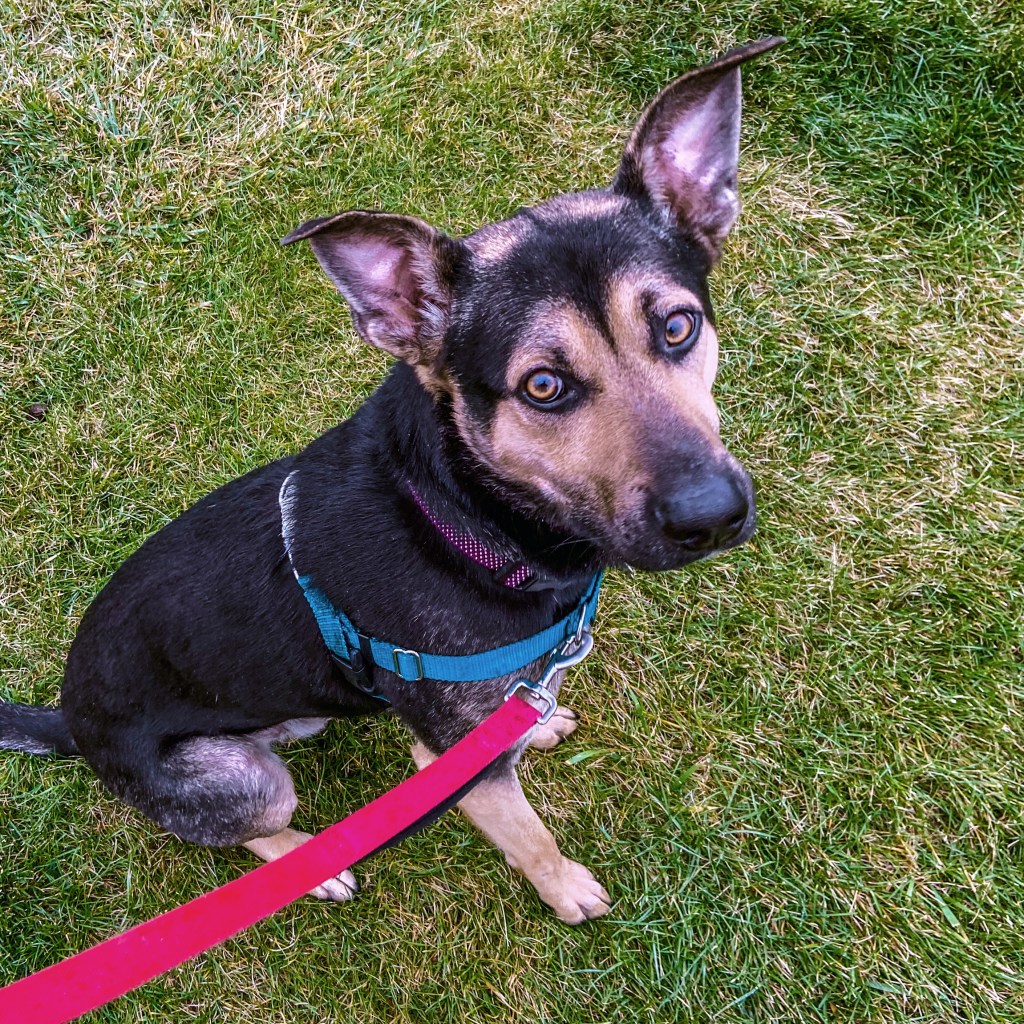
Because of the anonymity of the adoption process, we didn’t know anything of Hunter’s origins beyond his obvious resemblance to a black and tan Shepherd. It was also pretty clear that there was at least one other breed in there somewhere, if only because of his half-pointy, half-floppy ears that resemble bat wings when he perks them up. Eventually our curiosity got to us and so we paid for genetic testing. When we got the analysis, we learned we were proud owners of a 50-50 mix of German Shepherd and Catahoula Leopard Dog.
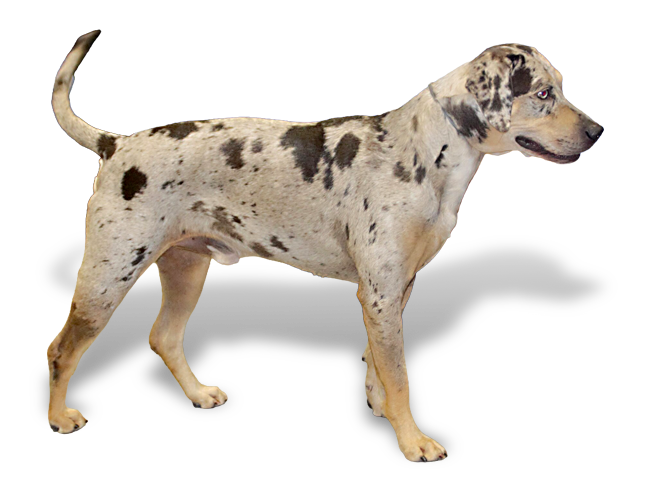
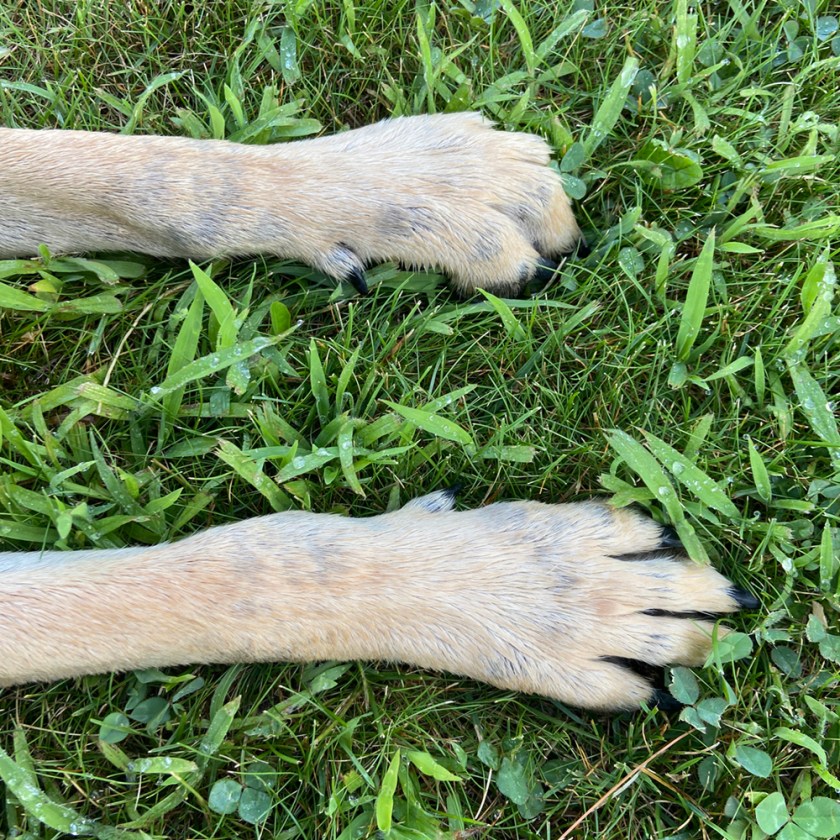
What’s a Catahoula Leopard Dog? you might ask. I mean, that’s what Marina and I asked; we had never heard of such a thing—we had to Google. The Catahoula Leopard Dog, a.k.a the Catahoula Hog Dog, a.k.a the Louisiana Catahoula Cur, or (simply) a.k.a. the Catahoula, is the state dog of Louisiana. It’s a breed that dates to the 18th century, when French settlers in the Mississippi basin crossbred their own Beauceron dog with Native American dogs, making a delicious creole canine gumbo. The resultant breed was a dog that was smaller and faster than the Beauceron, and well-adapted to hunting in swamps (they even have webbed paws). Catahoula were (and still are) used to hunt wild boar, and while I’m no hunter myself, I have to admit that’s pretty badass. They get the “leopard” part of their name from the fact that most (but not all) have an irregular patchwork of large and small spots. Some are white, some are brown, some are black, some are a bluish gray. They tend towards medium-large (65–75 pounds) and have floppy ears and soulful eyes, although to be fair, all dogs have those.
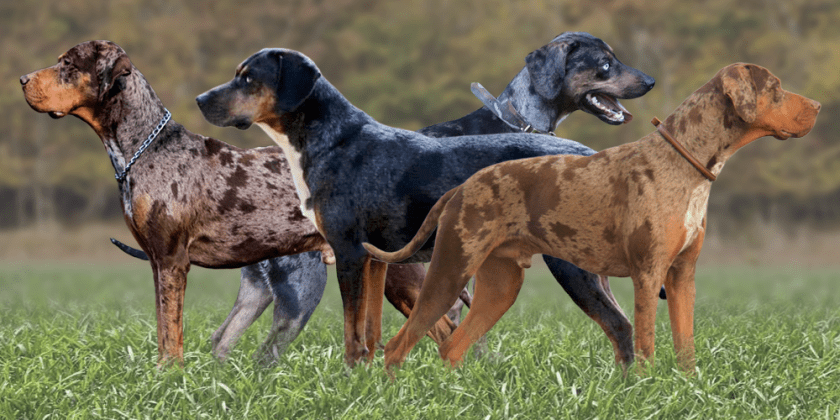
(collage of images from Wikimedia Commons)
Knowing Hunter’s genetics explained a lot about his idiosyncratic behaviors. When outdoors, he likes to range far from us, intent on flushing out rabbits and squirrels. When he trees the latter, he expectantly summons us, presumably to shoot the poor critter down. Indoors, however, he is docile and cuddly, and he hates when anyone leaves the room and tries to herd us together—a Hog Dog in the streets and a Shepherd in the sheets. But home life is not all snuggles and pets: at home, he goes into watchdog mode, staring intently out our front window, barking clamorous epithets at anyone passing within 30 yards of the house.
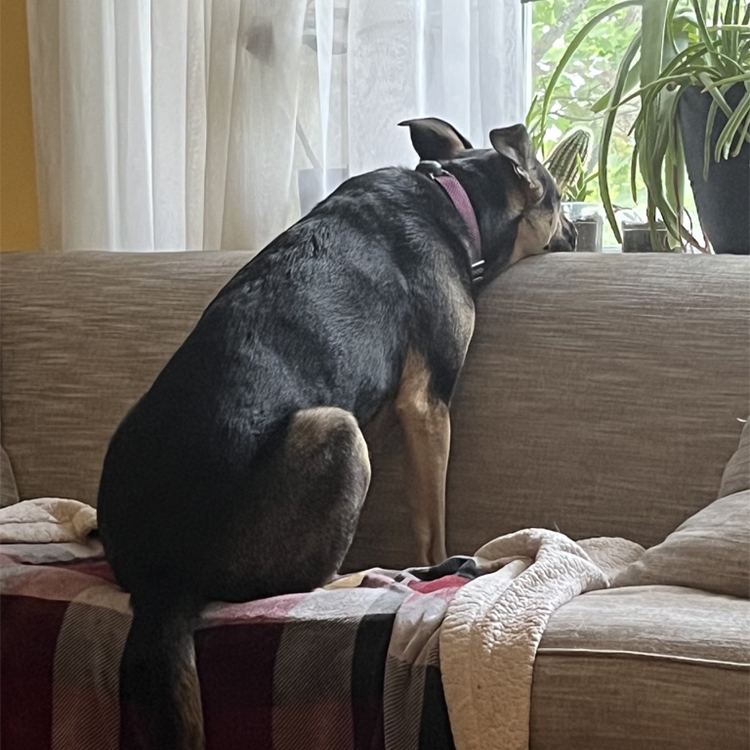
The Catahoula in Hunter goes beyond his behavior. While his coloration is Shepherd, his build is almost entirely Catahoula, from his attenuated, deer-like legs to his barrel chest. And when he gets wet, you can see through the slicked-down fur the distinctive spots on the skin below.
Our adoption papers say that Hunter was born in Massachusetts. We will probably never know how or why his parents were bred together; perhaps his mix is a sought-after one? I imagine many people would want a Shepha-loua; ours is certainly a very good boy (although again, all dogs are).
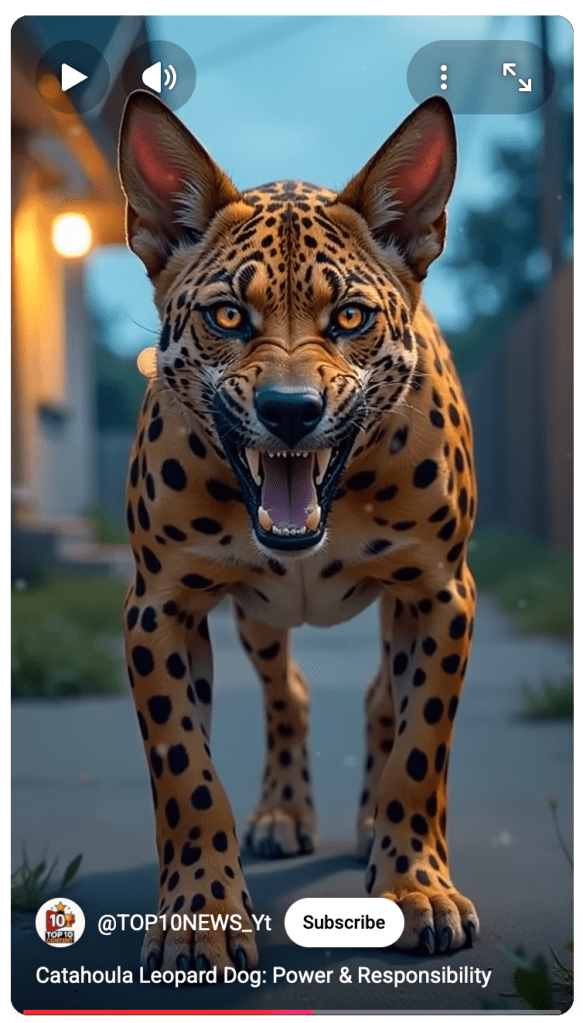
To end this essay on a jarringly different note (it’s a bad habit of mine): Since New England has no boar to offer, I have spent a not-insignificant amount of time watching YouTube videos about Catahoulas, trying to learn what activities and training might be appropriate for our dog. A lot of the videos are specifically about training your puppy to hunt. Many are silly domestic videos about the odd sounds the dogs make when irritated, or other creative ways they express dissatisfaction. And some are about how the breed requires careful training lest they become dangerous. Among these, I found some curious AI-produced shorts that present a large language fever dream of a “leopard dog” which might be at home in one of Tim Burton’s later films (you know, the bad ones). These videos, while hilarious, are a puzzle to me. What series of events led to their creation? Was there a human who holds a grudge against Catahoulas that dictated these to Nano Banana? Were they part of a larger AI project tasked with producing a video about every American Kennel Club breed? Were any humans involved at all? These hallucinatory vignettes are a cautionary tale, less for their warning regarding the breed, and more for their illustration of just how froot-loops bonkers artificial intelligence can be.